


Earlier this month, the Fifth Circuit Court of Appeals ruled 10 to 5 that the U.S. Constitution does not guarantee people in Jackson, Mississippi, the right to clean drinking water.
“The Constitution does not provide redress for every governmental wrongdoing,” Circuit Judge Kurt Engelhardt wrote for the majority.
Sure, but also, where is the responsibility when our government messes up?
Do we have a right to be told about pollution in a timely manner by our elected officials? Our federal water laws certainly think so. Of course, we created those in the 1970s, not the 1780s.
Filed in 2022, the lawsuit, Sterling v. City of Jackson, names four residents who lived through the city’s water crisis connected to the declining water infrastructure including lead in the pipes, E. coli, 750 boil-water notices (since 2016), and at times, no water coming out of the taps at all.
Here’s what we wrote about Jackson back then:
We All Need To Be Talking About Jackson...
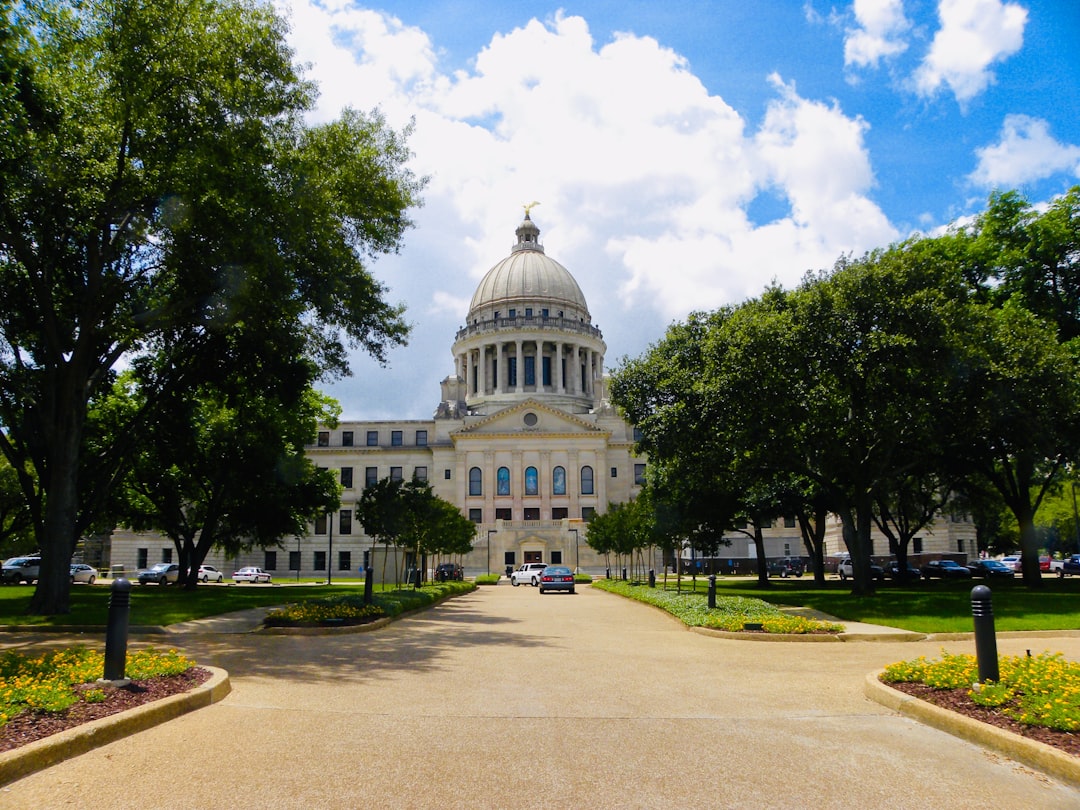
This week, about 180,000 residents in Jackson, Mississippi, and surrounding areas, no longer have clean drinking water.
The plaintiffs argued the city’s negligence violated their right to bodily integrity under the Due Process Clause in the Fourteenth Amendment.
The majority opinion didn’t agree, writing, “The state violates an individual’s right to bodily integrity when it physically intrudes on his person.” They offered examples like instances of sexual assault by a police officer or medicating prisoners against their will.
Mismanaging a water system, the court said, is “wholly different.” They contended there was no “historical basis” for a constitutional right to clean water.
To be clear, this ruling doesn’t discount federal or state drinking water protections. Jackson’s system is still under federal enforcement through the Safe Drinking Water Act and has been operating under court-ordered third-party management while infrastructure repairs and maintenance work continues.
This case was never about whether Jackson must comply with drinking water law. It looks at whether residents already harmed by a past failure to comply have a constitutional claim on top of that. The court said no. This time.
Of course, a lot of people emailed me and tagged me in this story, wanting to know what I thought about it.
Here’s my take.
How could our forefathers have imagined the environmental issues we are dealing with like rivers catching on fire, lakes running dry, or forever chemicals polluting our taps?
A constitution is a guide. We have to consider ways to amend this document that preserves the foundation while also staying relevant to the issues of today.
The court isn’t wrong that the text doesn’t say, “clean water,” but why do we keep treating a more than 200-year-old document like it could apply to every modern issue we face? It’s a framework from a very different time.
Before my dad died, he promised that in my lifetime, water would become a commodity more valuable than oil or gold, because there would be so little of it. I believe he was right, and that time has come.
We treat water like it’s endlessly available and free, but we have all kinds of water issues. Pollution, antiquated infrastructure, budget cuts, We have towns and villages dealing with water issues that started just like Jackson, where people were told the water was fine when it wasn’t.
Remember Flint? I remember when the president drank the water on TV to show the water was “safe.” Officials dragged their feet. It took almost two years after residents reported that something was wrong with the water for Flint Mayor Karen Weaver to declare a state of emergency due to elevated lead levels.
The 6th Circuit’s approach in the Flint litigation, allowed a constitutional claim to clean water move forward. They found that city and state did violate people’s constitutional right to “bodily integrity” by knowingly poisoning them and covering it up. Unfortunately, none of the officials have been successfully charged or convicted in the Flint water crisis.
The Fifth Circuit didn’t rule on whether people deserve clean water; it ruled on whether the Constitution requires a city to give it to them.
This ruling is only binding on federal courts in Mississippi, Louisiana, and Texas. It doesn’t bar similar claims anywhere else in the country. That means two federal appeals courts now disagree with each other on the same basic question: whether people harmed by a government’s contaminated water have a constitutional claim.
The Supreme Court exists to resolve these kinds of disagreements between circuits, and it leaves the Jackson residents one option they didn’t have before this ruling. They could take their case up to the highest court in the land.
Plus, a separate case, brought by the NAACP and Jackson residents over how federal infrastructure money for water repairs was distributed, is still pending.
While the community members who brought this case didn’t win, I want to point out what they gained.
The dissent in this ruling puts on the record, in a federal court document, that the city introduced and worsened lead contamination under a former mayor, misled residents about it, and knew the risks while it kept quiet. This ruling is now citable by the next lawsuit and the next lawmaker who wants to point out what went wrong and who let it happen.
This case also went all the way to the full court, not just a three-judge panel. Courts don’t send cases to en banc review, and judges don’t write dissents like this one, in questions they consider settled.
Of course, none of these legal battles directly fix people’s water troubles. They don’t undo what families have had to live through, and they don’t force Jackson or any other city to act faster or with more transparency next time.
This ruling does offer the next fight something concrete to build on. A different court could have a different ruling, helping the next community. When people without power take on a system that isn’t built to hear them, you get mixed results. The good news is that they get a record that no one can erase.
Speaking of Dragging Our Feet… PFAS Is Here To Stay
Did you see the new research from the International Chemical Secretariat (ChemSec) found that an ongoing expansion by many of the world’s top 10 PFAS producers “is driven by three main sources of demand—AI and data center infrastructure, semiconductor manufacturing, and lithium-ion battery materials?”
Yikes! That means PFAS production is going up, which is the wrong direction.
The Guardian explained that “PFAS are used for a new form of data center cooling touted as more water-and energy-efficient. In ‘two-phase immersion cooling’ systems, servers are immersed in a pool of PFAS with a low boiling point. As the hardware gets hot, the fluid boils, drawing heat away as vapor. That rises to a water-cooled condensing coil at the top of the tank, cools back to a liquid state, and reenters the cycle.”
Now riddle me this… Why has the U.S. EPA continued to mess around with PFAS regs?
The agency announced in May that it was taking a “holistic approach” to tackling PFAS, and pushed back the compliance timeline for PFOA and PFOS, allowing eligible water systems to apply for up to two extra years to comply with federal regulations. That means if you drink water from a system that has higher levels of these PFAS chemicals, you have to wait potentially two more years for your water system to filter it down to a “legal level.” Some might argue that no amount of PFAS is safe.
The four additional PFAS regulations (set in 2024) for PFNA, PFHxS, GenX and PFBS, were withdrawn in May. U.S. EPA stated it wanted to re-review the science on these chemicals. Even though the agency’s own toxicity assessments found that exposure to even small doses of PFNA, GenX and PFHxS could pose serious health risks.
Meanwhile, a study that would help regulators understand which industries dump PFAS chemicals with their wastewater has stalled. A public notice shows the survey of wastewater treatment plants, which was the first of its kind, was submitted to the White House for approval nearly two years ago. That’s a pretty long time wait time.
Gosh, it’s so hard to regulate these chemicals! The makers of these products have known for decades that they are toxic, but the EPA just needs a little more time… Bonus assignment: review the docs from the companies themselves.
Ok, for the constitutional enthusiasts out there: What’s your take? Do we have a right to clean water? Should we?
God gave us the Right to have clean, pure water and filter it ourselves if necessary. Governments and bureaucracies SHOULD NOT prevent us or determine what is put in our water.
Absolutely we have the right to clean water. The U.S. should change its policy so that manufacturers must prove chemicals safe before they are sold.