


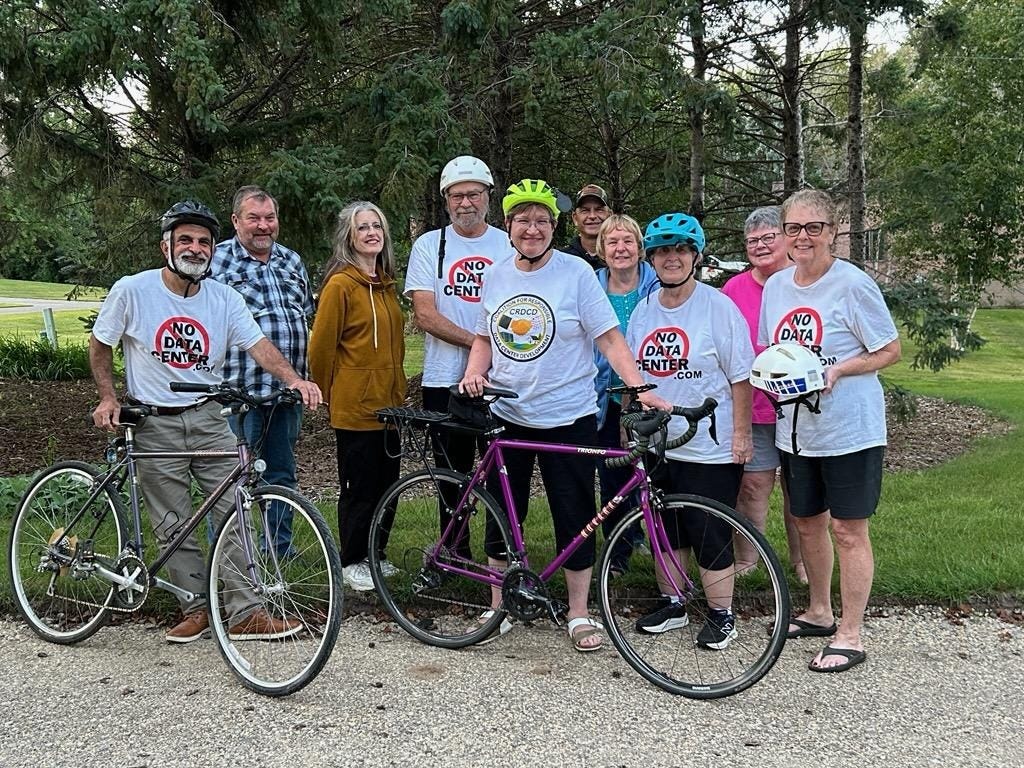
Want to know what it's like when a data center secretly comes to your town?
Today we're talking with organizers from Farmington, Minnesota, a small community of 25,000 that woke up to a 350-acre hyperscale data center approved near their homes.
Kris Akin is the Outreach, Communications and Partnership Director for the Coalition for Responsible Data Center Development. Matthew Shaw is a Virginia-based volunteer researcher, who tracks data center opposition movements nationwide. Their story is one you need to hear, and their fight may be coming to your backyard next.
Farmington, Minnesota, sits on the outer ring of the Twin Cities suburbs. It has the kind of community life that people move toward with a historic downtown and 48 miles of nature trails.
What it doesn’t have, since December 2019, is a grocery store. Residents drive to neighboring Lakeville or Rosemount to buy food. So, when the golf course southeast of town went up for sale, people were hoping a developer would build homes.
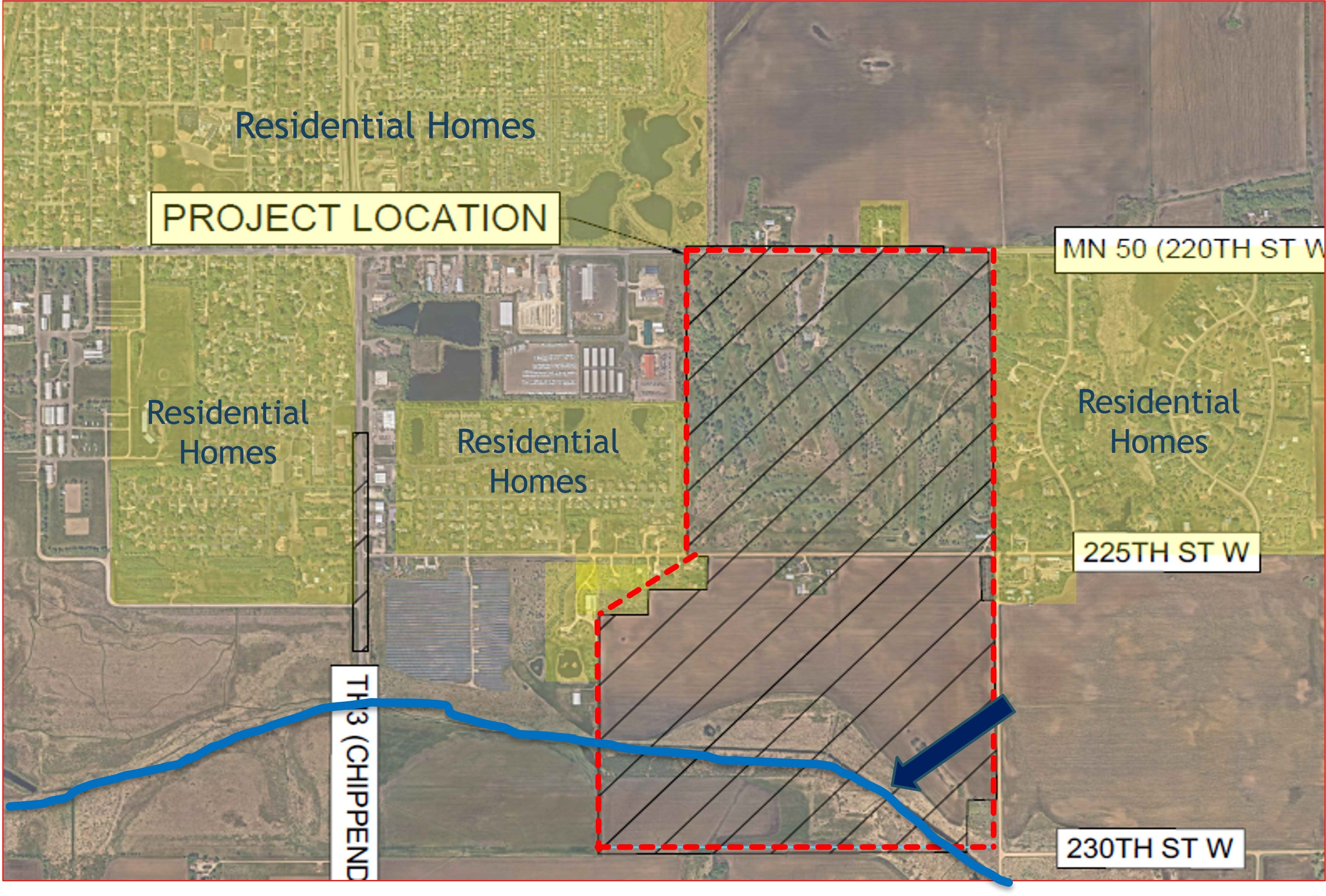
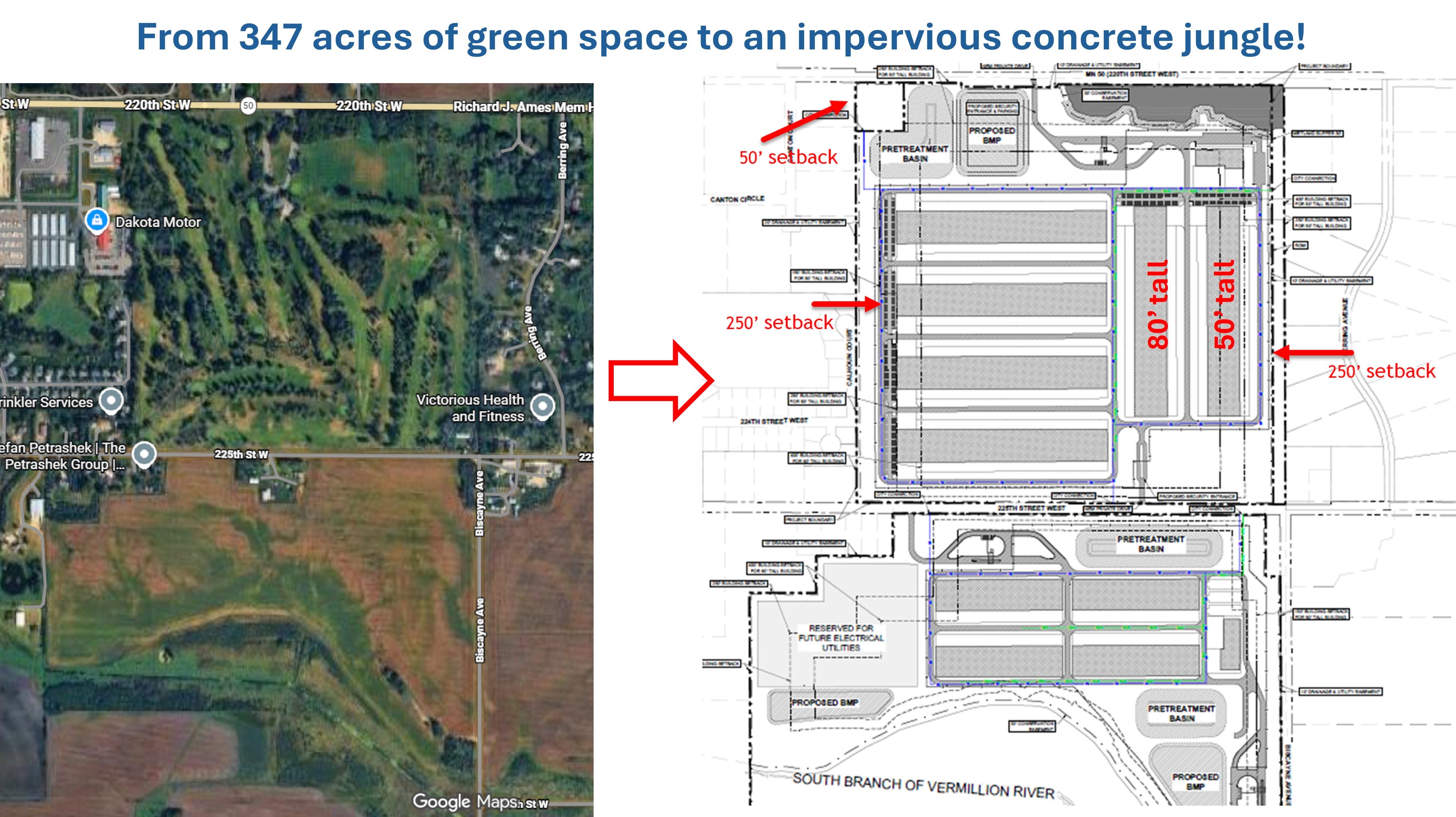
What they got instead was an almost 350-acre hyperscale data center with massive buildings, some rising 50 to 80 feet, planted between four established neighborhoods just 1.9 miles from downtown. The project was approved in November 2024. Non-disclosure agreements had been signed. The identity of the end user still hasn’t been revealed.
This community’s story shows what happens when neighbors refuse to be steamrolled. We spoke with Kris and Matthew about what they’ve learned, what’s at stake, and why Farmington’s fight may matter far beyond Minnesota.
The Coalition for Responsible Data Center Development is a citizen-centered community working together to mitigate the impact of data center installations on electric grids, land use, conservation, and water resources.
Kris, take us back to the beginning. Tell us about Farmington and what life was like before the data center.
Kris: The community still retains its small-town character with a historic downtown, county fairground, and pioneer village. The land to the south and east is mostly farmland. It felt like our small town was growing and moving forward with the pleasant community life we were used to.
The golf course southeast of Farmington in Castle Rock Township was for sale as the owners were ready to retire. Our neighborhoods surrounding the golf course expected a new owner to purchase the business or a housing developer to create a new housing development there.
Our community has been without a grocery store since December 2019. Farmington needs more “rooftops” to support one, according to market studies, and a housing development would have helped create more of a market for it.
The political landscape in Farmington is ugly, and public support has eroded with the resignation of the mayor after an outburst by him when he announced a limit on public comments to 5 minutes to preserve “decorum.”
He has been very passionate about this project and our community. Public data requests by our Coalition revealed that the planning commission director has asked for coaching on how to talk to the public and that a city employee had joined our email list only to then share it back with others at city hall.
How did you first learn about data centers coming to your area?
Kris: When the data center discussions surfaced publicly in the spring of 2024, I initially trusted that our city leadership would thoroughly vet a project of this magnitude. Annexation, rezoning, and the transformation of a long‑established residential area are not small matters. I believed the city would either reject the proposal or relocate it to a more suitable site.
I was wrong. The city notified neighbors that lived directly near the golf course but not residents that lived across the street about a public hearing.
Our neighborhood started holding discussions, attending city planning commission meetings as well as city council meetings. We expressed our concerns from May to November of 2024, protesting outside of City Hall, meeting with the Mayor and City Council members, printing and posting yard signs and working to make others aware of what was happening.
November of 2024 the proposed development was approved for a 350-acre data center on the golf course property between four neighborhoods just 1.9 miles from our downtown area.
As I did some more research wondering why our city leaders would support a hyperscale data center, it became clear that something fundamental had shifted at City Hall. Key staff positions were new. The Community & Economic Development Department had changed and restructured to consist entirely of City Council members.
Few cities in Minnesota operate this way. Most maintain a balance of residents and elected officials to ensure transparency and accountability. Farmington moved in the opposite direction.
This restructuring matters. It concentrates power. It narrows perspectives. It makes it far easier for major decisions to move forward without meaningful public involvement.
Non-disclosure agreements (NDAs) were signed by some City of Farmington staff and information about end users of the hyperscale data center have not been revealed or released.
Editor’s note: What is an annexation agreement? Minnesota keeps a database here.
There are about 20 proposed data center sites in Minnesota alone. Does your fight in Farmington feel like it could set a precedent for those communities?
Kris: Yes! Our neighbors organized a 501(c)(4) organization. We believed that people would think we were “NIMBYS” (not in my backyard) folks and overreacting to the location of this hyperscale data center.
We quickly learned about the scope and size of a facility like this and felt that it was not the proper place to support this industrial infrastructure.
We filed a lawsuit in January of 2025 and began lobbying at the city, county, and state level to bring awareness about this rapidly growing industry that needs some guardrails, policies, and guidelines to keep people and our planet safe.
We also organized as a 501(c)(3) under the same organization name. Our lawsuit has been challenged twice with a motion to dismiss by the City of Farmington, and the developer (TRACT) and a judge has rejected their motion and said our case has merit. We are in discovery now with a court date of May 2027.
Since we started our website and Facebook page, we have heard from so many people across the country that are experiencing the same issues with NDAs, questionable tactics, rush to approval, and vague information.
If we can get our day in court, spread sunshine on how this happened and win, it would set a precedent and send a message to Big Tech hyperscale data center developers that the people and the planet come first.
The main legal claims outlined in this lawsuit are:
Breach of Contract (Count I): The City of Farmington allegedly violated the Orderly Annexation Agreement (OAA) with Castle Rock Township by rezoning the Subject Property without the Township’s consent and failing to engage in the required dispute resolution process.
Declaratory Judgment under Minn. Stat. Ch. 555 (Count II): Plaintiffs seek a declaration that the City of Farmington’s rezoning of the Subject Property is prohibited by the OAA and is arbitrary, capricious, unreasonable, and unlawful.
Judicial Review of Zoning Decision under Minn. Stat. § 462.361 (Count III): Plaintiffs argue that the City’s zoning determination was inappropriate for the proposed Data Center’s scale and use, violated the OAA, and was arbitrary, capricious, unreasonable, and unlawful. They seek to reverse the zoning determination and declare the ordinance void.
Declaratory Judgment under the Minnesota Environmental Rights Act (MERA) (Count IV): Plaintiffs allege that the Data Center project will pollute, impair, or destroy natural resources protected under MERA and seek a declaration that the project violates MERA.
Injunctive Relief under MERA (Count V): Plaintiffs request temporary and permanent injunctive relief to prevent the Data Center project from proceeding until compliance with MERA is demonstrated.
Castle Rock Township has also filed a lawsuit regarding their Orderly Annexation Agreement.
You’ve been working toward a statewide moratorium. What would that look like, and how close are you?
Kris: We have been meeting weekly with lobbyists and staff from about 20 other organizations in the Minnesota area that support clean water and our environment. We have had sit down meetings with reps from the House and Senate.
We have had two rallies at the rotunda inside the capitol and shared literature with all legislators and the governor.
We supported 3 bills at the State level:
The bill to impose a statewide moratorium on data-center development until Minnesota has a regulatory framework in place was widely and heatedly discussed among legislators but was never put to a vote.
An NDA bill would have banned local elected officials from signing non-disclosure agreements (NDAs) with developers. That bill passed the Senate with bipartisan support but was blocked in the tied House.
A bill aimed at better protecting Minnesota’s water supply by requiring large-volume industrial water users to get their own permit from the Department of Natural Resources rather than hide behind municipal water permits advanced in both the House and Senate but wasn’t able to cross the finish line this session.
How have you built your nonprofit and worked with others to move your cause forward?
Kris: We have filed the necessary paperwork with the IRS, Minnesota Secretary of State and Minnesota Attorney General. We have joined the Minnesota Council of Non-Profits to receive important information about nonprofit boards and organizational procedures. We have developed relationships with 20 different non-profit organizations in the state.
We have a volunteer researcher from Virgina (Matthew), who is providing support and research and connections. Some on our team visit online or by phone with other Minnesota folks fighting hyperscale data centers in Hermantown, Pine Island, Monticello, and Rosemount.
Data centers are often talked about as invisible infrastructure. What do you want people to understand about their physical footprint?
Kris: Hyperscale Data Centers are larger facilities than the legacy data centers built and maintained from years back.
The proposal in Farmington will be 342.81 acres with 12 large buildings and two admin buildings. Some buildings are 50 to 80 feet tall. There will be lots of concrete and asphalt parking lots. Rainwater will warm up as it runs off the buildings and parking lots and will run into our groundwater and nearby trout pond.
The power and water consumed by a hyperscale data center this big will be as much as our community uses. A new additional water tower and an electrical substation will be required. The City of Farmington has agreed to provide the water to the data center.
Diesel generators will be placed on the tops of buildings for a backup and will need to be tested regularly to assure they are working. Extra diesel fuel will be stored on site in large tanks. During the construction phase of 5 to 7 years, there will be up to large gravel and sand deliveries daily, increased construction equipment, and crew traffic.
Reports from Ellendale, North Dakota, where a data center is being constructed, indicate that residents stay off the roads during morning and late afternoon to avoid the heavy traffic.
Matthew: Our data is often thought of as floating in the “Cloud,” an ethereal and nebulous phenomenon that has nothing to do with the real world. I like to think of data centers as part of the Data Center Industrial Complex (DCIC), first termed by Mél Hogan. This concept encapsulates not only the data centers themselves but the supply chains, end users, and environmental impacts from development, use, and e-waste.
It begins with extractive industries: copper, cement, rare earth minerals, lithium, etc., all of which must be dug up, refined, and transported around the world. This brings direct harm to the people living in those areas, often in poor and/or indigenous communities.
Next is the fossil fuel industry, with data centers consuming 4.4 percent of total energy demand in 2023; they are expected to grow to up to 12 percent by 2028.
There is also the risk of increased nuclear proliferation with larger plants, such as Three Mile Island, and smaller modular reactors becoming a popular option for the tech giants who need constant energy but don’t want the CO2 emissions.
Data Center water consumption is typically only measured in direct usage, not indirectly from power generation. Data Center water consumption is centralized, often affecting already water-stressed communities, which exacerbates local water insecurity.
Noise and light pollution from data centers are harmful to people and animals. First, it is harmful to the employees; it can directly damage their hearing. Next, it affects the community with a hum/buzz, which can cause headaches, stress, and sleep issues. Lastly, it affects wildlife, causing new migration patterns and habitat development in birds, butterflies, bats, etc.
Matthew, you’re based in Virginia, one of the most data-center-dense places on Earth. What made you want to volunteer your research skills for a fight happening in Minnesota?
Matthew: First, some background on me. I have BA degrees in political science and public policy, and since then have been working for a contractor for HUD’s Office of Policy Development and Research (PD&R). Everything I say is my own and doesn’t reflect my employer or HUD, to be clear.
We host data and case studies on all things housing, and I help do quality assurance, write short summaries, and work on the help desk. I am also starting my master’s program in international relations (IR).
During the past year, I kept hearing stories from an IR perspective about how the U.S. needs data centers to defeat China. Big Tech would come into a small/medium-sized town, sign NDAs, and then there would be a community opposition movement to stop development.
This immediately interested me from an “underdog” perspective. It also interested me because I see parallels to other industries like nuclear and fossil fuels, where communities are placed in the position where, for “national security,” they must suffer the consequences to “win.”
I wanted to create a nonprofit which would be like HUD’s PD&R but for communities facing data centers. I originally was going to do this myself and started creating the dataset to do so. As I was making the dataset, I stumbled upon CRDCD, which hosted local information but also had a goal to create nationwide information, such as the 101 guide on how to start a data center opposition movement, and after reaching out to Kris and meeting the rest of the team, we all decided I would be a good fit.
I benefit from learning from CRDCD about their firsthand struggles, and CRDCD benefits from my work through media coverage, finding new community groups, NGOs, and other resources.
The data centers have won in Northern Virginia; they have local politicians in their pocket, but they have been slowed down by interconnection delays. They don’t want to wait 7 years in Virginia when they can do it elsewhere.
What’s the one piece of research or data that you think every local official should have to read before approving a hyperscale data center project?
Matthew: The thing about data center development is that there is (usually) no single issue. It is context-dependent and multifaceted.
Take Pine Island, Minnesota, where they are planning on building one of the largest battery facilities for backup power generation, but may not have adequate firefighting resources if there were to be a lithium battery fire.
There needs to be comprehensive planning coordination across all governmental agencies, particularly public health, water, and energy, at the local, county, state, and national levels, and that just isn’t happening right now because the administration wants full speed ahead,
Big Tech comes into town offering jobs and taxes, and rushes through planning without community input.
If I am talking to a council member, I would tell them about AI Now’s North Star Data Center Policy Toolkit.
If I had to pick for an academic, it would be this journal article on the making of critical data center studies: .
If I were speaking to a scientist, I would say read the latest doomsday clock report from the Bulletin of the Atomic Scientists and ask how data centers are involved.
To an economist, I would refer them to building a solidarity ecosystem for AI.
You’ve held two rallies at the state capitol. Can you talk about how you organized for those rallies for maximum impact.
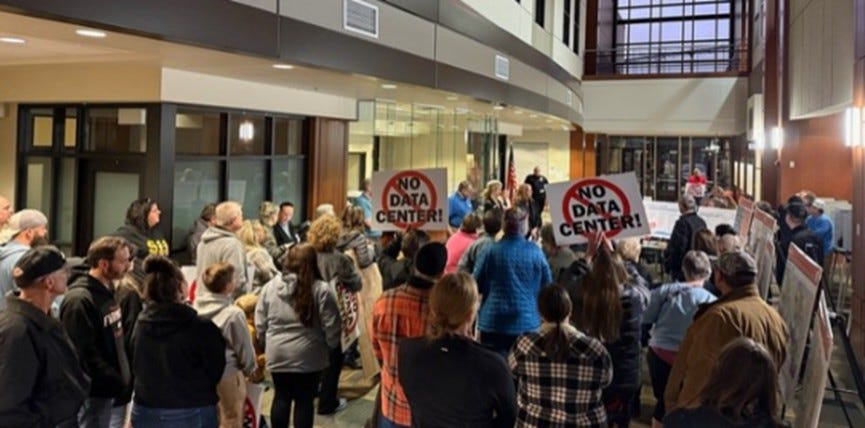
Kris: Boy! It was a lot of work, but the message was carried out through our promotions, media releases, advertising and at the event. At the rally, we had speakers, tables with information and lots of signs and banners.
Some meetings with legislators were scheduled after the rally the same day. After the events, the message was carried on through newspaper, radio, and digital sharing of the event. A video was created both times to share with the public.
We made a lot of good noise!
What’s your message to people in other states who are watching similar projects proposed in their backyards?
Kris: Get informed. Read research and factual stories about the harms and impacts that these huge facilities bring to a community.
Look and find published research and studies. Look for public information that shares the processes and planning that went on before the project was announced.
Request public data from your local units of government.
Schedule meetings with your elected officials where you can speak to them face to face.
In this new digital world, use digital tools to share images and information. It seems so ironic that the very tools we all use are supported by data centers, but they can be designed and built with more time provided to protect people and planet!
Adopt all that Erin Brockovich’s experiences and story have taught us!
What do you need most right now and how can others follow along?
Awareness and building support for civic engagement is difficult these days. We are grateful for people like Erin that have joined the fight. It will help—if people follow her call to get involved.
Our biggest need is our fundraising for the lawsuit. Our legal fees are expected to total around $250,000.
Some folks think we are suing for money or for our homes to be bought out, but we are challenging the process and the location and care about the safety of our water, air, and environment.
We have raised $100,000 through a bike ride, dinner and silent auction, and personal donations. Twelve families have been sharing the burden of frequent donations.
We have multiple ways for others to donate and donations to our Coalition for Responsible Data Center Fund are tax deductible as a 501(c)(3).
The Coalition for Responsible Data Center Development is based in Farmington, Minnesota. Their interactive map of opposition groups nationwide, monthly research reports, and a community toolkit for organizing are available on their website.
Learn more about Farmington Technology Park here.
What This Fight Can Teach Your Community
1. The process matters as much as the project. It’s not what they’re building; it’s how they got it approved. NDAs, restructured oversight bodies, selective public notification, rushed votes. When your city is moving unusually fast and unusually quietly, that’s your first warning sign. Request public data early and often. You have that right. Use it.
2. Know what you’re dealing with. A hyperscale data center is not your grandfather’s server farm. We’re talking hundreds of acres, buildings five stories tall, diesel generators on rooftops, water consumption equal to an entire city, and years of heavy construction traffic through your neighborhood. Get the physical facts on paper.
3. The NDA is a red flag, not a formality. When elected officials sign non-disclosure agreements with developers, you lose your right to know who is coming, what they’re building, and why. That should make every single one of us angry. Push back on NDAs at every level. Farmington’s coalition nearly got them banned statewide.
4. Find your people. As of May 2026, there are more 345 opposition groups with more than 428,000 members fighting these exact battles across the country. Most formed in the last year and don’t even know each other yet. Reach out. Connect with communities near you. Share what works. That’s how movements grow.
5. Get your legal footing early. Lawsuits are expensive and they take time, but they create accountability that rallies and yard signs alone cannot. Farmington’s coalition survived two motions to dismiss. Their case has merit, a judge said so. Start building your legal strategy before you need it and support the communities already fighting.
6. Go to your state capitol, not just city hall. Local decisions can be shaped by state policy, and state policy can be shaped by you. Farmington’s coalition helped advance three bills in a single legislative session—a moratorium, an NDA ban, and water permitting reform. None crossed the finish line this time. But legislators are paying attention, and that pressure doesn’t go away.
7. Use every tool you have, including the digital ones. I know the irony isn’t lost on anyone. The very tools we use every day are powered by the data centers we’re fighting. Use them anyway. Video, social media, email lists, digital organizing. Make noise, make connections, and make yourselves impossible to ignore. That’s exactly what Farmington did, and they’re still standing.
Thank you for stepping up, exposing the magnitude, the speed, the secrecy and having a platform so we can get create a collective to stop this.
NDAs? That’s not right for any government official or huge tech bro business to be able to get away with, especially for consequential matters that affect entire towns. I mean, the greed at the expense of everyone and every living thing is just astounding.