


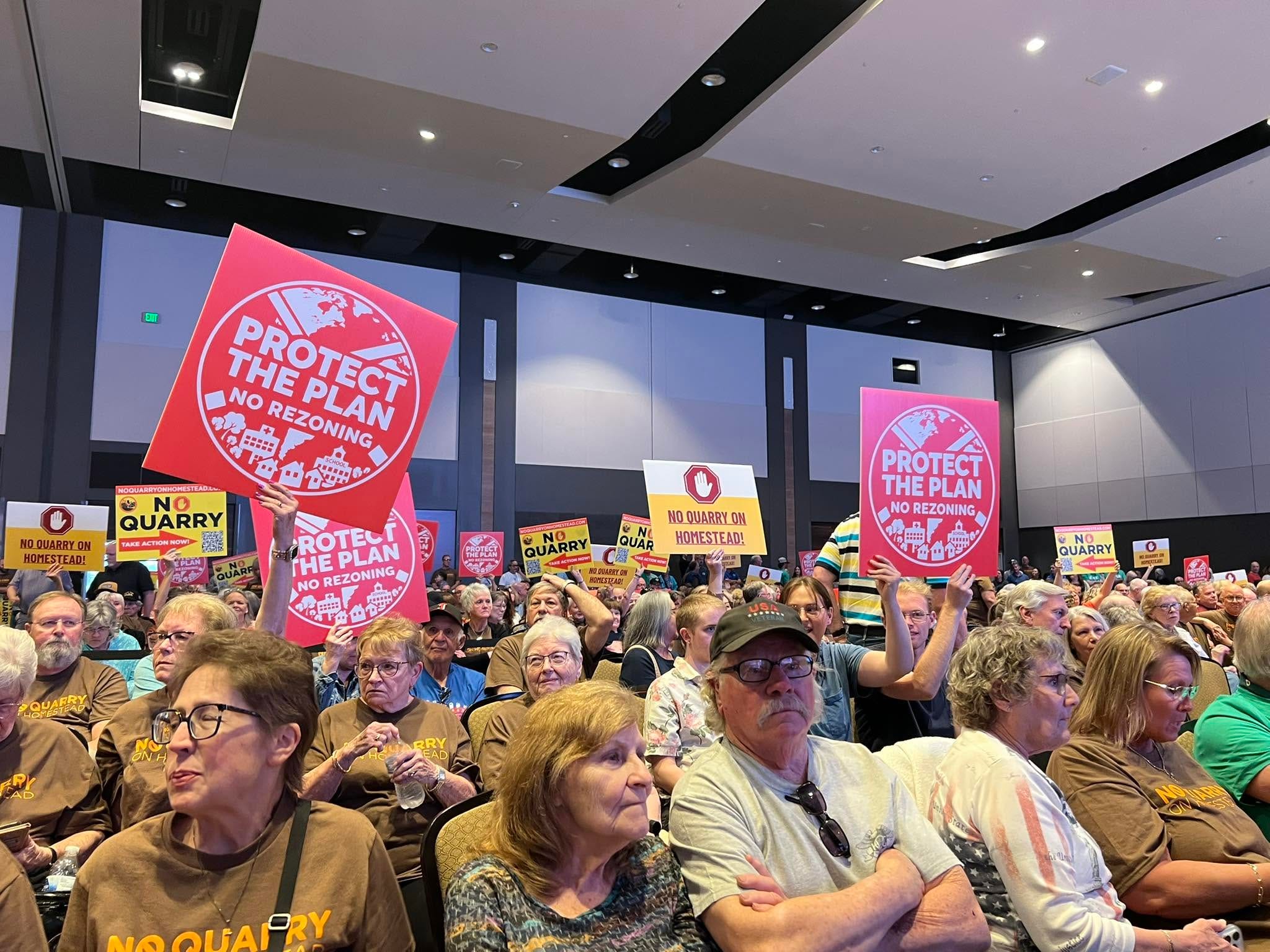
In March 2026, residents of a quiet valley in Fort Wayne, Indiana, learned that a limestone quarry, complete with an asphalt plant, a concrete plant, and a mini rail yard (a complex of 1,600 total acres) was headed for the land next to their elementary school, across from a brand-new hospital campus, and up against a protected wetland called Eagle Marsh.
Eighty-one days later, the Board of Zoning Appeals voted 4–0 to deny it. The developer withdrew everything else that same night.
The numbers you need to know: 12,842 signatures. 44 organizations. 1 unanimous vote.
We connected with Shawn McCarthy, one of the people who helped lead that fight, because this story is proof that ordinary people can beat a well-funded developer. I want you to know exactly how these fights get won, lost, and set up to happen again.
“We were told nobody wins these fights,” Shawn said. They won anyway, and it’s not over yet.
Whether you are dealing with issues from a data center, a quarry, an abandoned landfill, or some other pollution problem, this story can serve as your playbook.
Learn more at their website No Quarry on Homestead.
The company behind the plan
The developer was The Heritage Group, an Indianapolis-based conglomerate. Before residents ever got to the merits of a quarry in their backyard, it was worth asking what kind of neighbor Heritage had been elsewhere.
The record isn’t subtle. A Heritage Group subsidiary, Heritage Thermal Services, ran a hazardous waste incinerator in East Liverpool, Ohio. In December 2011, an explosion there killed a service technician and hospitalized another employee; four of the OSHA citations that followed were repeat violations.
In July 2013, a second explosion released roughly 800 pounds of arsenic- and manganese-contaminated ash into the surrounding neighborhood.
The EPA documented Clean Air Act violations across multiple years, and the Department of Justice described the pattern as systemic noncompliance, leading to a 2018 consent decree of nearly $600,000 combined in penalties and community lead abatement funding.
Fourteen more informal enforcement actions followed over the next five years.
Heritage also founded and spun out Heritage-Crystal Clean, a publicly traded company in which Heritage Group held a minority stake. Heritage Group’s chairman since 1980, Fred Fehsenfeld Jr. chaired that company’s board from 2012 to 2023—spanning the entire period in which the violations occurred that led to a 21-count federal complaint, settled in December 2023 for more $1.1 million, for conduct that included operating a hazardous waste facility in Indianapolis without the permit required to do so.
This same company showed up to Shawn’s community promising hot dogs at school field days.
From alarmed to organized in 81 days
Shawn first learned about the quarry from a Reddit post, pointing to a local news story that aired in March 2026. The story featured a resident who’d spotted a reporter filming the valley and had pulled over and became the first person interviewed on camera.
HOA leaders nearest the proposed site had actually known slightly longer, as Heritage’s lawyers had contacted them in late February after survey crews were spotted in the valley.
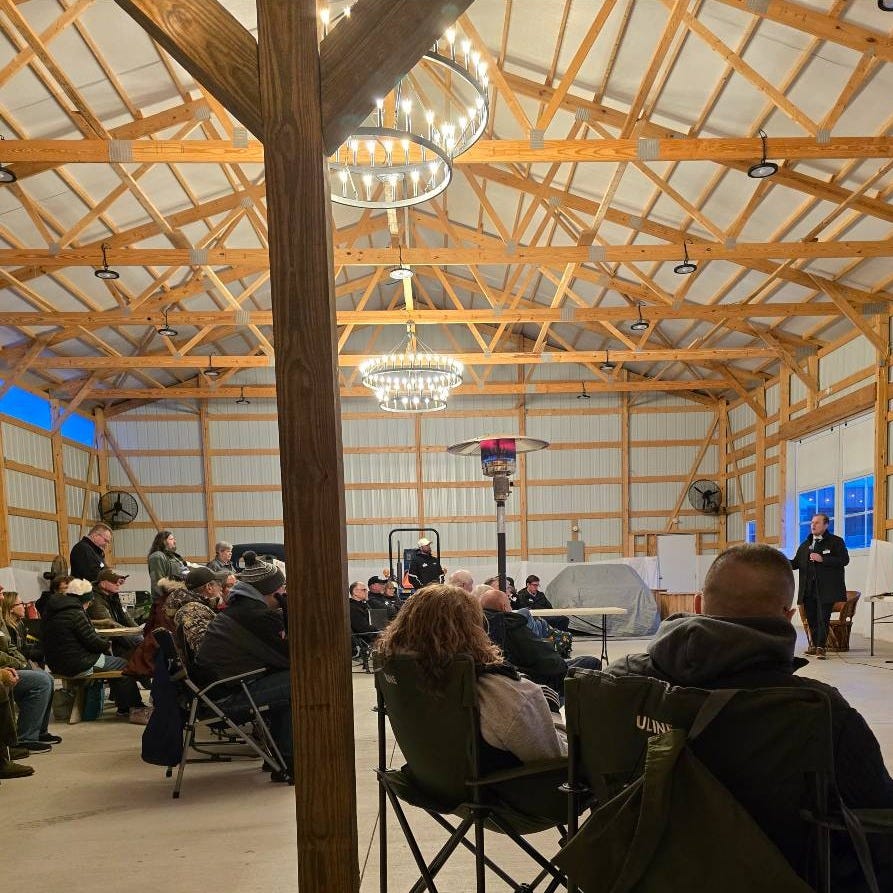
What followed moved fast. A small gathering that residents still call “the barn meeting” happened within days of the news story. By March 16, a few dozen people were at the barn again to talk strategy. The next day, the local school board, tipped off by someone in the emerging group, put the quarry on its agenda.
A week later, the board convened a special meeting to formally oppose the project, packed with residents and, notably, Heritage representatives who Shawn says argued their case badly enough to generate even more press.
The next night, roughly 250 people showed up to a meeting at Lafayette Meadows Elementary, diagonally across the street from where the quarry would have gone. A small group had pulled together an agenda and a slide deck in a few days.
“By that point we’d made the shift,” Shawn said. “From March 6 to March 24, I would say we went from alarmed to organized, and we just kept getting more and more organized. I don’t think anyone anticipated the speed.”
The specifics of working a plan
The coalition that formed ended up calling itself “the Alliance,” and organized itself in layers. A small group of founding leaders, including an attorney, an HOA president who helped raise most of the money, and the resident who’d started the grassroots website, made top-level calls.
About ten people joined the effort to support them with the coordination work. A larger group of volunteers canvassed, postered, and posted. And the wider community showed up to meetings, signed petitions, and kept the pressure visible.
The work itself was sprawling: weekly planning meetings, a pressure campaign aimed at local officials and candidates, outreach to local businesses, and untangling two separate, overlapping government processes Heritage needed to clear.
The first was a Board of Zoning Appeals special-use approval to put a quarry in agricultural-zoned land. The other was a Planning Commission rezoning request to the county’s highest industrial classification, needed for the concrete plant, asphalt plant, and rail yard. Helping residents understand which process needed what kind of input, legal argument versus public pressure, became its own full-time job.
An early filing error by Heritage delayed their hearing by a month. At the time, organizers worried the delay would drain momentum. In hindsight, Shawn believes it did the opposite, giving the Alliance a full extra month to grow, organize, and fortify.
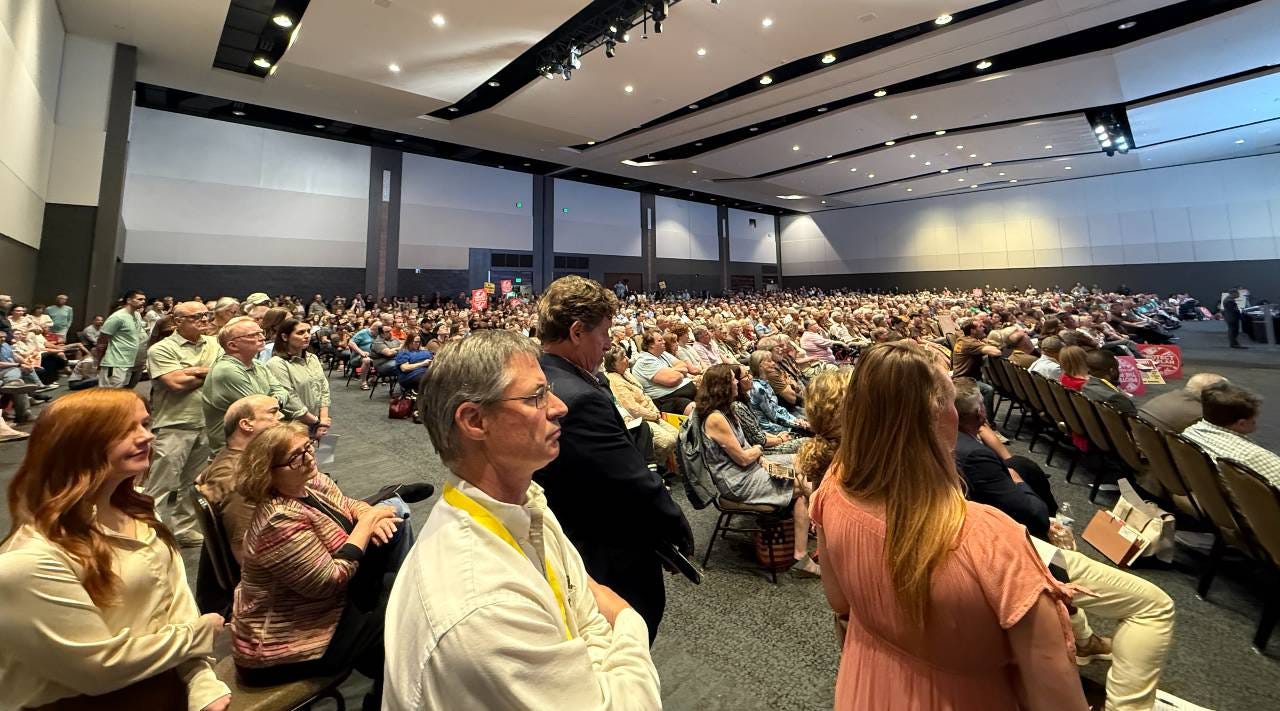
By the final hearing, moved to the Allen County War Memorial Coliseum to accommodate the crowd, 56 people spoke against the quarry and one spoke in favor. The opposition included two hospital CEOs, a county surveyor, a land use expert, a school district superintendent, and a hydrogeologist.
“It felt like a war council,” Shawn said. “Like chiefs of a tribal alliance planning an attack. We were essentially playing defense, but for some reason it felt like we were planning an attack rather than planning defense.”
What Heritage got wrong
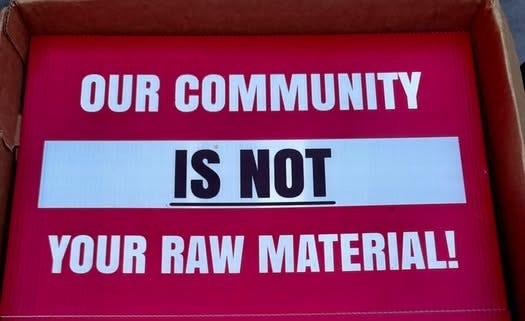
Heritage’s public case, as Shawn describes it, leaned on minimization and misdirection: downplaying the eventual size of the quarry opening, glossing over the rail infrastructure, and—in a claim Shawn calls simply false—insisting there wouldn’t be silica dust in the air from a limestone operation.
The company commissioned a study claiming the quarry would raise nearby property values, a conclusion Shawn says relied on math that didn’t hold up. Executives leaned hard on jobs, despite the project promising up to 50 permenant positions across hundreds of acres.
The company routinely invoked “responsible regulation” in a state where, Shawn notes, quarry regulations are notably weak, and where Heritage’s own industry lobbies actively to weaken them further.
“They lied and misled and downplayed,” Shawn said. “It was clear they didn’t have a lot of faith in the intelligence of the community.”
Why the Board said “no”
Publicly, the Board of Zoning Appeals gave little away. Board members didn’t debate on the record, and the vote came without much theater.
But one member and a county land-use official did flag that the project didn’t fit with “All In Allen County,” the county’s long-range development plan, and that it threatened surrounding wetlands.
Shawn thinks something else mattered more: sheer scrutiny.
“For the folks in this process who were elected, or appointed by elected officials, I think they had a real reason to contemplate what the fallout would be from the mob, essentially,” he said. “And that’s what we created: a mob. One that was informed, motivated, perhaps a little scared, but damn determined.”
The ongoing fight…
Heritage can reapply to the BZA after a year. Shawn is blunt that the bigger threat isn’t this one project but the structural weaknesses in Indiana’s zoning appeals system that made this fight winnable by chance rather than by design.
He points to two fronts.
On defense: a state statute exempting mineral rights outside “urban areas” (currently defined, in part, by proximity to as few as eight houses that could be quietly loosened to let developers route around local zoning boards entirely.
On offense: conflict-of-interest rules for who’s allowed to sit on these boards in the first place. One Allen County BZA member manages a contracting company that subcontracts inside quarries. Under current law, that’s not disqualifying, making the standard close to an overt quid pro quo.
Shawn and parts of the Alliance plan to push the Indiana Statehouse when it reconvenes in January 2027 to redefine conflict of interest to cover direct or meaningful indirect financial stakes in the type of development a board member is voting on.
“If someone would financially benefit from a certain type of industrial development, I don’t think it’s a stretch to say they shouldn’t have a say over whether that development is allowed,” he said. “That’s just common sense.”
What it cost, and what it gave back
Shawn put in more than 250 hours during 81 days. He also mentioned that he’d been laid off at the start of the year and was navigating that alone, with six kids depending on him. The quarry fight, he said, became something else entirely.
“It was a different kind of pressure—bigger, if not a little more existential of a crisis—but I wasn’t in the boat alone,” he said. “We had a crew fighting that storm.”
Shawn is a veteran, and he described the fight as giving him something he says a lot of people struggle to find after leaving the service. It gave him a restored sense of purpose and a role in something bigger than himself, in pursuit of justice for people who might not have gotten it otherwise.
The community, he said, showed him something too. In a place with real political and socioeconomic range, people set differences aside and stayed in it together for 81 days straight.
What Shawn wants other communities to know
The proposed site was, in his words, “a uniquely bad idea” with wetlands, a hospital, a school, homes, all within a few hundred feet. The community fighting it had real advantages: education, income, time, and existing relationships with local officials that many communities facing similar fights simply don’t have.
“That’s kind of one of the tragedies of the whole situation,” he shared.
A resident raised it with him directly during the fight, a wealthy, mostly white, suburban neighborhood turned this into a five-alarm fire. What happens when the next Heritage Group shows up somewhere without those resources?
His advice for communities without that head start begins with one question asked before anything else: How many people care about this issue?
Find your mob. Not how many people think you can win, but how many people actually care. Enough to canvass ten hours a week? Enough to call politicians, sit through hearings, chip in money if they have it?
Learn the process cold. What approval does the developer actually need? Who decides? Learn every decision-maker’s name, their job, their church, and whether anyone’s kid plays ball with theirs.
Build out from what you’ve got. Who do your people already know in local media, in local government? Earned media, Shawn said, did more for the Alliance than anything they paid for.
“If you can make enough noise, they may come and cover you,” he said.
And finally, a distinction he wants kept intact. This isn’t a call to fight every development everywhere. The country still needs aggregate, still needs infrastructure, still needs the industries these projects serve.
The fight is for the communities where a project simply doesn’t belong, and for making sure the deck isn’t stacked against them before the fight even starts.
Shawn McCarthy is a resident of Fort Wayne, Indiana, and an organizer with No Quarry on Homestead. Learn more at noquarryonhomestead.com.
The corporate conglomerates don't care about the people their projects will affect. They don't care about the environment. They don't care how many species will go extinct due to their irresponsible actions.
The current administration, who's campaigns they fund don't care either. They don't care about climate change because they know they won't be around when the Earth becomes unlivable for the human species. They don't care about the future of our planet. They only care about how much money they can put in their pockets today. This is their addiction.
Parents can't feed their children. They can't afford to give them a better education than they had. They can't afford healthcare, gas, utilities, childcare, rent or a new home.
They don't care and it's time to do something about it. Peacefully protest. Call your Congressman. Hold up a sign in the rain. Pass out information packets. Attend strategy meetings and town halls.
Most importantly, VOTE. Make your voice heard. This story is proof that if you do these things it works.
Thanks for organizing and documenting.