


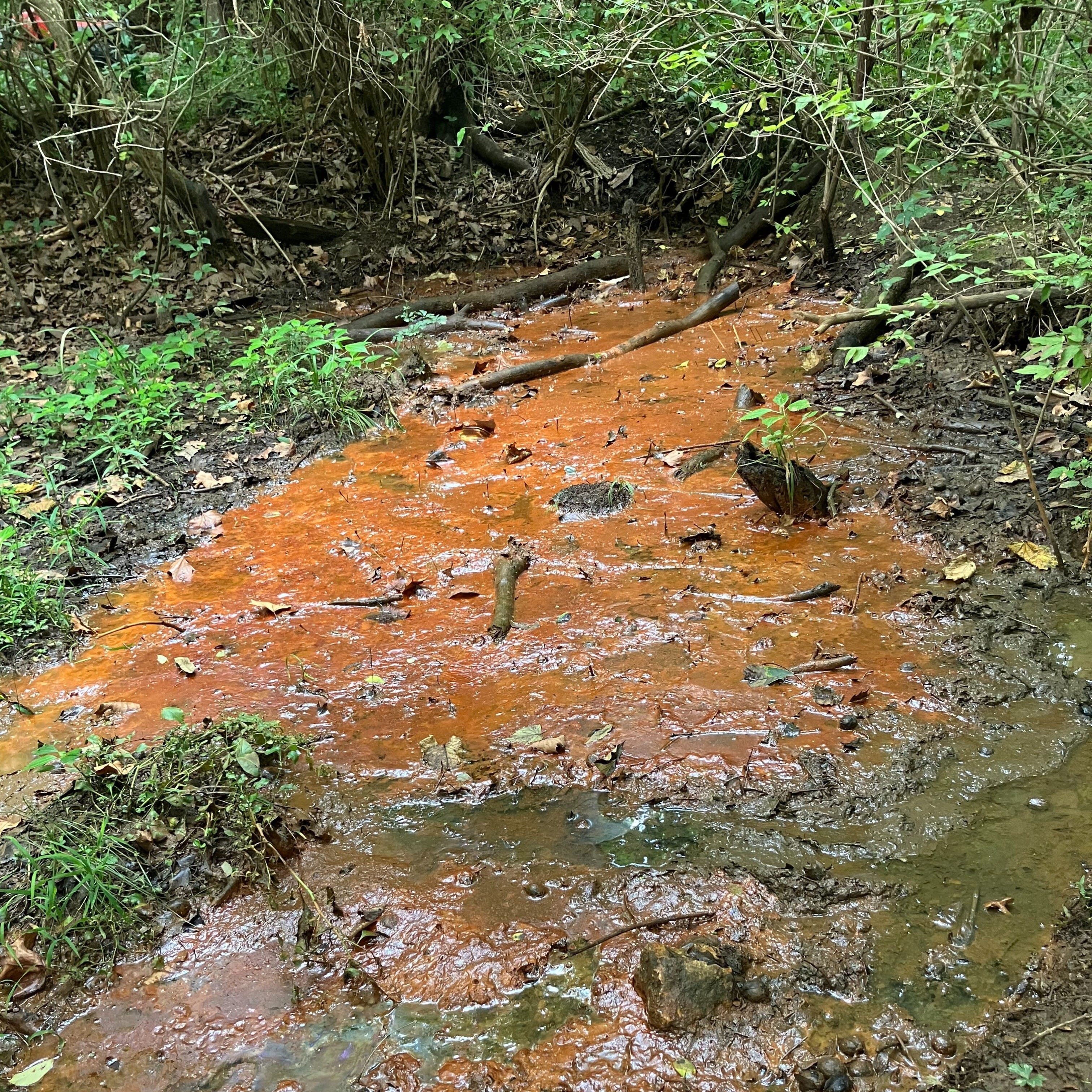
Jim Roberts pictured a simple life when he bought 20 acres in Franklin County, Missouri: a small head of cattle and a garden with kids playing in the creek. What he got instead was a toxic nightmare seeping from the ground in neon orange streams, poisoning his spring water with arsenic, lead, and cancer-causing chemicals.
And not a single government agency will fix it. Not at the federal, state, or local level.
For more than a year, Roberts has been trapped in a bureaucratic hell, the kind that only happens when you have the audacity to ask the government to do its job.
He’s made the phone calls. Filed the sunshine requests. Attended the town halls. Gotten the testing done. The results came back damning with elevated levels of iron, copper, arsenic, PFOA, and PFOS.
The orange goo bubbling up on his property isn’t just ugly. It’s poisonous. And it’s flowing directly into a creek that feeds into the Meramec River less than two miles away, a waterway that winds through three Missouri counties before emptying into the Mississippi River.
But here’s the kicker. Roberts’ 1.5-year-old son and pregnant wife are living on this property. They can’t run cattle anymore. They’ve had their private drinking well water tested, and while it came back safe, they live with the possibility of it getting contaminated. It’s literally seeping into the creek and spring on their land.
They installed a high-dollar water filtration system, taking every precaution they can to keep their family safe. But why do so many hard-working people in this country have to pay out of pocket to ensure that their drinking water is safe?!
The Landfill Nobody Owns
The source of Roberts’ misery is the Generally Landfill, a festering 40-acre wound on the landscape that’s been abandoned since 1993 and border his farm. Its history reads like a case study in regulatory incompetence.
Originally permitted in 1975 to Franklin County, the landfill changed hands in 1979 to John R. Generally. Later, it was operated, and eventually purchased, by Interstate Disposal Systems Inc., run by James Zykan Jr. This is where things went predictably, catastrophically wrong.
Zykan had already been involved with a problematic landfill in Wright City. When his permit was denied for the Generally site in 1991, he didn’t close shop. He kept operating illegally for two more years, accepting god-knows-what and dumping it into unlined trenches and ravines.
The Missouri Department of Natural Resources says there’s “no telling what’s dumped in there.”
When IDS finally abandoned the site in 1993, it was never properly closed or maintained. The cover was inadequate—full of rock, not soil. Waste stuck out of the ground. Erosion gullies four feet deep opened up, exposing more refuse. Vegetation ran wild. The leachate, that toxic soup of decomposing garbage and chemicals, started seeping out.
DNR inspection reports from 2020 describe “several large leachate outbreaks” on the north and south slopes, flowing into drainage ditches and straight into tributaries of the Meramec. There’s even a leachate collection sump at the site, likely still full, with a storage tank that may contain more contaminated liquid. Nobody knows for sure. Nobody’s checking.
The property has changed hands through tax sales multiple times—but here’s where it gets truly bizarre. The current property is still in the name of a deceased individual, according to an email Robert’s shared with TBR. The winning bidder at the most recent tax sale refused to take ownership once they discovered what was actually on the land.
And this isn’t the first time. According to Roberts’ sunshine requests, Franklin County has sold this property at tax auction multiple times, and every single time, the winning bidder has refused to take possession once they learned about the landfill. The county refuses to return money to these unsuspecting bidders, even though they know full well there’s a toxic landfill on the property.
Despite being a known environmental disaster, the landfill’s existence was never properly disclosed on the property deed when the county sold it at auction, as required by state regulations.
It’s a masterclass in how to create an environmental time bomb with nobody to blame, and nobody willing to defuse it.
The Circle of Finger-Pointing
When Roberts first called the Missouri DNR in August 2024 after noticing the orange goo, he got the most unexpected response.
“We’re understaffed. We’re underfunded. The landfill is abandoned. There’s nothing we can do for you.”
Only after Roberts in his own words, “raised hell” did DNR conduct testing. The results confirmed hazardous contamination. Then DNR said, once again, there was nothing they could do.
Why? Because the landfill is abandoned and “Subtitle D” solid waste landfills fall under state jurisdiction. But the state claims it has no authority or funding to clean up abandoned sites.
Fine, Roberts thought. If the state won’t act, surely the federal government will.
Wrong.
The EPA’s response was swift and unhelpful. EPA has no plans for the Generally Hauling site and no funding for it, because Subtitle D landfills are delegated to state authorities.
So, Roberts turned to Franklin County. The county said it has no funding or jurisdiction to clean up the site and that DNR is the agency with oversight, punting the ball right back to the state agency that already said no.
In late July, Franklin County sent a letter to DNR asking for cost estimates and cleanup processes. DNR’s response: the county should hire engineers to assess the situation. In other words, you figure it out and pay for it.
It’s a perfect circle of bureaucratic buck-passing, each agency pointing at the others while Roberts’ family breathes, drinks, and lives with the consequences.
I call it agency hot potato. Not a fun a game!
DNR does at least acknowledges the scope of the problem.
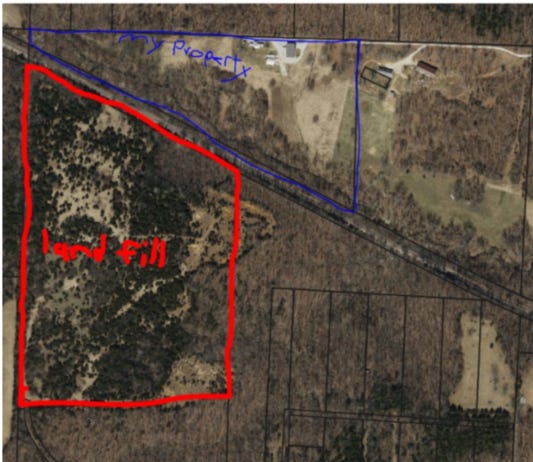
Abandoned landfills across Missouri “have been a problem for decades,” the agency admitted to local news. In fact, this landfill is just one of 30 contaminated landfills identified in Missouri.
But here’s the part they won’t say out loud. They have no plan to fix any of them.
The EPA Just Made Things Worse
If Roberts’ story sounds bleak, it’s about to get bleaker. Because while he’s been fighting his local battle, the federal government has been busy making sure cases like his become even more common.
In November, the EPA announced how it’s planning to redefine the scope of “waters of the United States” (WOTUS) under the Clean Water Act, significantly limiting the wetlands it used to cover.
The proposal says wetlands and streams that are seasonal or flow inconsistently would no longer be protected under the act, which was originally passed in 1972 to address rampant water pollution.
The rule builds on the Supreme Court’s 2023 decision in Sackett v. EPA, which dramatically narrowed federal jurisdiction over wetlands. The Court ruled that wetlands must have “a continuous surface connection to bodies that are ‘waters of the United States’ in their own right’ to be protected under the Clean Water Act.
Translation: If the water isn’t visibly, continuously connected to a major waterway, it’s no longer the federal government’s problem.
EPA Administrator Lee Zeldin calls this action “cutting red tape” and providing “regulatory certainty” for farmers and landowners. The rule will focus federal jurisdiction on “relatively permanent, standing or continuously flowing bodies of water” and wetlands directly connected to them.
Sounds reasonable, until you realize what it means in practice.
According to analysis by the Natural Resources Defense Council, 38 to 70 million acres of wetlands are at risk of pollution or destruction under post-Sackett decisions.
These waterways aren’t just pretty bird habitats. Wetlands help filter pollutants, recharge aquifers, and prevent flooding. They’re nature’s kidneys, and we’re about to leave half of them unprotected.
The new rule specifically excludes groundwater—you know, the stuff people actually drink—from federal protection. It also removes protections for ephemeral streams that only flow after rainfall and seasonal wetlands.
Let that sink in. In a country where climate change is making droughts and floods more severe, the federal government is deciding that water bodies affected by precipitation don’t deserve protection.
For Roberts, the timing couldn’t be more cruel. His contaminated spring feeds into a creek that flows to the Meramec River. Under the old interpretation of the Clean Water Act, there might have been an argument for federal intervention because of that connection. Now?
The EPA has already made clear it considers this a state matter, and this new interpretation of the law may offer them the legal cover to keep saying no.
The Human Cost
Back in Missouri, Roberts keeps fighting. He’s organized a Facebook group called “Close Generally Landfill.” He’s done interviews with local news, where viewers watched toxic orange goo bubble up from his land like something out of a horror movie. The Missourian has run five stories on the disaster. State Senator Ben Brown held a town hall in November where the landfill dominated the discussion.
None of it has produced action.
Roberts has test results showing his water contains known carcinogens. He has inspection reports documenting massive leachate outbreaks. He has maps showing the contamination flowing toward a major river system. He has a toddler and a pregnant wife who deserve better than this.
And he has three levels of government telling him the same thing in slightly different ways: Not our problem.
“What’s it going to take, my family to get cancer before this gets addressed?” he asked.
It’s the kind of question that shouldn’t need asking in 2025, more than 50 years after the Clean Water Act was supposed to guarantee Americans’ right to clean water. But here we are.
Who Pays When Nobody’s Responsible?
The Generally Landfill represents a perfect storm of regulatory failure. The operator ran it illegally, then abandoned it. The property changed hands through tax sales to buyers who likely didn’t know what they were getting. The state says it lacks authority and funding. The feds say it’s not their jurisdiction. The county says it’s someone else’s job.
Meanwhile, the contamination spreads. The chemicals don’t care about jurisdictional boundaries or budget constraints. Arsenic doesn’t pause its leaching schedule because three agencies can’t agree on who should pay for cleanup.
This mess is what happens when we build a regulatory system designed not to solve problems, but to avoid responsibility for them. We create overlapping authorities with conflicting mandates, ensuring that when something goes wrong, everyone can point at someone else.
We pass sweeping environmental laws, then systematically defund and hamstring the agencies tasked with enforcing them. Missouri DNR is “understaffed and underfunded” by its own admission. But that’s a political choice, not an inevitable fact.
We appoint EPA administrators who view the agency’s mission not as protecting public health, but as reducing “red tape” for industry. Zeldin has traveled to all 50 states since taking office, he says, listening to complaints about the invasive nature of water regulations.
Has he spent equal time with families like the Roberts, living downstream from abandoned toxic waste?
When courts narrow the scope of environmental protection, as the Supreme Court did in Sackett, we act as if this is neutral legal interpretation, not a policy choice with material consequences for real people.
The result is predictable: families like the Roberts get poisoned, and nobody does anything about it.
The Big Picture
This story is not unique. It’s just unusually well-documented, thanks to Jim’s persistence. How many other families across the country are living next to abandoned landfills, breathing contaminated air, potentially drinking tainted water, and getting the same runaround?
Missouri has identified 30 contaminated landfills, and Generally is just one of them. How many more haven’t been identified? How many property owners don’t have Roberts’ tenacity?
As the federal government continues to narrow the scope of water protections, cases like this one could multiply.
The Clean Water Act was supposed to be a promise that we wouldn’t tolerate poisoned rivers and toxic dumps. It was passed in an era when the Cuyahoga River literally caught fire from pollution, when industrial waste flowed freely into waterways, and when environmental disasters were routine.
Now, more than 50 years later, we’re watching that promise erode. Not with dramatic fanfare, but with bureaucratic shuffling and legal hairsplitting. With budget cuts and jurisdictional disputes. With agencies pointing fingers while families deal with the consequences.
If government can’t protect its citizens from poisoned water, what’s the point of having one?
What Happens Next?
As of December 2025, the Generally Hauling Landfill continues to leak. Roberts’ family continues to live with contamination. The EPA’s new Waters of the United States rule is open for public comment until January 5, 2026*, before being finalized.
*Comments can be submitted here.
Missouri DNR says it’s working with communities to find long-term solutions for abandoned landfills but provides no specifics on when or how. Franklin County says it’s in conversations with state legislators about funding. The EPA says this is a state issue.
The leachate keeps flowing. The Meramec River keeps accepting it. Somewhere downstream, someone else’s drinking water is getting a little more toxic.
But at least we’re not letting overzealous bureaucrats micromanage puddles and ponds.
The Roberts family continues to seek help addressing contamination from the Generally Hauling Landfill. Anyone with information about potential legal remedies or funding sources for abandoned landfill cleanup is encouraged to contact the family through their public advocacy page.
Hi Erin & Suzanne! Great piece.
My name is Teresa and I am very familiar with the Generally Hauling landfill and the other abandoned landfills in the St. Louis region as I was a solid waste supervisor for the MO DNR. I was present at the time of the 2020 inspection that you referenced in your post and I was the primary inspector during the solid waste inspection at Generally that took place earlier this year, on February 3, 2025 (with a follow-up on March 3rd). I was actively presenting the issues with this site throughout this year and participated in many conversations to work on solutions between the different entities involved in the game of 'agency hot potato.' I was fired from the department last month (I go into more details on my termination here: https://teresamosa.substack.com/p/my-side-of-the-story). For an agency that claims to be "understaffed and underfunded," they certainly gave little regard when it came to firing someone proactively involved with this very site. The department is paying for a "landfill assessment" to be conducted at Generally Hauling landfill and other abandoned landfills in the St. Louis region from now through 2026...why are they paying for something that I, and other inspectors within their own agency, have told and shown them repeatedly throughout the years?
Thank you for sharing this story with your subscribers; this and the other abandoned landfills you referenced need serious attention to protect the surrounding population and environment. Since I am no longer muzzled by my position in the department, I intend to find a lasting resolution with this site and the others that I am intimately aware of. It is not right that the leachate, erosion, and other noted issues are allowed to continue unchecked when the department has known of them for decades.
I thought of @Sarah Kendzior when reading this, both on account of the geography and your reference to “agency hot potato”